
A healthy smile is often associated with straight teeth and good oral hygiene. However, your bite, the way your upper and lower teeth come together, plays a much larger role than many people realise. An imbalanced bite may affect not only your teeth and jaw but also your muscles, posture, headaches, sleep quality and overall wellbeing.
Many people live with chronic jaw pain, recurring headaches, neck tension or worn teeth without recognising that these symptoms may be connected. Bite imbalances can develop gradually over time due to tooth wear, injury, dental restorations, teeth grinding, or changes in jaw position, and because symptoms often appear outside the mouth, the underlying cause may be overlooked.
Neuromuscular dentistry takes a broader approach by considering how the teeth, jaw joints, muscles and nervous system work together. Health Hunter connects people with preventative healthcare providers and services, helping individuals better understand modern approaches to oral health. Practitioners such as Dr Maheer Shah focus on restoring healthy function while preserving natural tooth structure through evidence based, patient-centred care.
Understanding Neuromuscular Dentistry
What Is Neuromuscular Dentistry?
Neuromuscular dentistry is a branch of dentistry that evaluates how the teeth, jaw joints (temporomandibular joints, or TMJs), facial muscles and nervous system function together. Rather than looking only at individual teeth, this approach aims to understand the relationship between the bite and the body's overall function.
Every time you chew, speak, swallow or yawn, your jaw muscles coordinate with the TMJs and your teeth. When these structures are balanced, movement is generally smooth and comfortable. When the bite is misaligned, muscles may work harder to compensate, placing additional stress on the jaw joints and surrounding tissues. This comprehensive approach is one reason neuromuscular dentistry is increasingly used to assess patients with chronic jaw pain, headaches, bite instability and complex restorative needs.
How the Jaw, Muscles and Teeth Work Together
The human jaw functions as part of an integrated system. The teeth determine how the jaw closes, the jaw joints guide movement, the muscles generate force, and the nervous system coordinates the entire process. When one component changes, the others often adapt in response. A worn filling, missing tooth, or uneven bite may alter jaw movement, and over months or years this can increase strain on the chewing muscles, contribute to muscle fatigue, or change how the jaw joints function.
Temporomandibular disorders are common in Australia, affecting up to 60 to 70 per cent of the population, particularly adults aged 20 to 40, with women at least four times as likely to be affected, making them one of the most common causes of chronic facial pain. Understanding these interactions allows clinicians to investigate whether bite function is contributing to a patient's symptoms rather than treating each symptom in isolation.
Why Bite Function Matters Beyond the Mouth
Many people are surprised to learn that bite function may influence more than oral health. Poor bite alignment may contribute to jaw discomfort, headaches, facial muscle fatigue, neck tension, difficulty chewing and excessive tooth wear. Although these symptoms can have many possible causes, assessing bite function may form an important part of a comprehensive evaluation. Rather than viewing teeth independently, neuromuscular dentistry considers how the mouth interacts with the rest of the musculoskeletal system.
How Your Bite Influences Your Entire Body
Jaw Function, Tension Headaches and Migraines
Headaches are among the most common neurological complaints worldwide. In Australia, around 1.7 million people, roughly one in fifteen Australians, were living with long-term migraine in 2022.
Temporomandibular disorders and headaches, including tension-type headaches and migraines, are strongly associated and frequently occur together. It's worth being upfront about what the evidence does and doesn't show here. There isn't strong evidence that bite misalignment directly causes TMD or migraines, and systematic reviews of splint and bite-based therapies have found the research on headache outcomes to be mixed, with some studies reporting reduced headache frequency and intensity and others finding limited or low-certainty benefit. Rather than framing it as a direct cause-and-effect relationship, the more accurate picture is that addressing bite and jaw function can improve overall posture and reduce excess muscle tension through the head, neck and shoulders, and it's this whole-body postural effect, not the bite alone, that appears to contribute to symptom relief for some patients.
Not all headaches originate in the brain. In some individuals, excessive tension within the jaw muscles can refer pain to the temples, forehead or behind the eyes. People who clench or grind their teeth during sleep may unknowingly overload these muscles every night, and as muscle fatigue develops, tension headaches may become more frequent or persistent. Understanding whether jaw function contributes to headaches may help guide more appropriate assessment and management, ideally alongside a patient's GP or headache specialist rather than as a standalone treatment.
Neck, Shoulder and Postural Changes
The jaw does not function independently of the neck. The muscles that control jaw movement connect with muscles throughout the neck, shoulders and upper spine, so when bite alignment changes, muscle activity may also change. Some individuals may compensate unconsciously by adjusting head posture or muscle tension. Although posture has many contributing factors, clinicians increasingly recognise the close relationship between jaw function and cervical muscle activity, and this whole-body perspective is an important feature of neuromuscular dentistry.
Sleep, Teeth Grinding and Muscle Fatigue
Many people grind or clench their teeth while sleeping without realising it. This condition, known as sleep bruxism, may contribute to worn teeth, fractured fillings, jaw stiffness, facial pain and morning headaches. Poor sleep may also increase pain sensitivity, and around 40 per cent of Australian adults experience some form of inadequate sleep, which can affect physical recovery and overall wellbeing. Addressing bite stability may form part of a broader strategy to reduce excessive muscle loading and improve oral function.
Common Signs Your Bite May Be Misaligned
Some people notice clicking every time they open their mouth, while others experience occasional locking or difficulty opening fully. These symptoms may occur when structures within the TMJ don't move smoothly, and although clicking doesn't always require treatment, persistent symptoms accompanied by pain should be professionally assessed.
Healthy teeth are designed to tolerate normal chewing forces, but when excessive force concentrates in particular areas, teeth may gradually wear down or develop cracks. Common signs include flattened chewing surfaces, chipped enamel, fractured restorations and increased tooth sensitivity. Modern restorative approaches such as biomimetic dentistry aim to preserve as much healthy tooth structure as possible while restoring natural strength and function.
One of the challenges of bite-related problems is that symptoms may develop gradually. Some people undergo repeated treatment for headaches, facial pain, ear discomfort or neck tension without identifying the underlying contributor. Persistent symptoms deserve comprehensive assessment, particularly when conventional investigations haven't identified a clear explanation, and neuromuscular dentistry provides another perspective by evaluating how jaw position, muscle activity and bite function interact as part of the body's overall system.
How Neuromuscular Dentistry Is Different From Traditional Dentistry
Looking Beyond Individual Teeth
Traditional dentistry often focuses on treating individual problems such as tooth decay, fractured teeth or gum disease. While these treatments are essential, they may not always explain why certain problems continue to recur. Neuromuscular dentistry expands the assessment by examining how the teeth, jaw joints, muscles and nervous system work together. Instead of asking only "which tooth is causing the problem," the focus becomes "how is the entire chewing system functioning." This broader perspective may be particularly valuable for people who experience repeated fractures of dental restorations, chronic jaw discomfort, headaches or unexplained facial pain, and by understanding how the bite functions during everyday activities such as chewing and speaking, treatment can be planned to improve both comfort and long-term stability.
Biomimetic Dentistry and Preserving Natural Teeth
Another important aspect of Dr Maheer Shah's philosophy is biomimetic dentistry. The word biomimetic means "to imitate nature." Rather than removing large amounts of healthy tooth structure, biomimetic dentistry aims to preserve as much natural tooth as possible while restoring its strength and function, an approach reflected in the Australian Dental Association's own guidance on minimally invasive dentistry.
Dr Shah often compares the difference between traditional and biomimetic dentistry to how cars were built decades ago versus today. Older cars were built with very strong, rigid structures designed to last, but when they did eventually fail in a crash, that same rigidity meant the impact was transferred straight through to the occupants. Traditional dental restorations can work in a similar way: strong and long-lasting, but when they do eventually fail, the failure can be more severe and harder to repair, sometimes costing the tooth itself. Biomimetic dentistry works more like a car's crumple zone. The restoration is designed to flex and absorb stress in a way that protects the tooth underneath, so that even if something does eventually go wrong, the natural tooth is more likely to be saved rather than lost.
This is achieved by using like-for-like materials wherever possible. Resin is used on the inside of the tooth to mimic the softer, more flexible dentine layer, while ceramic is used to replace the harder outer enamel. Ceramic has excellent physical properties for this purpose and is highly chemically inert, making it one of the safest materials available to place in the mouth. Together, these materials aim to recreate the tooth's natural strength and flexibility rather than replacing it with a single rigid material, with the ultimate goal of keeping the natural tooth in the mouth for longer.
Biomimetic principles focus on conserving healthy enamel, strengthening weakened teeth, reducing unnecessary drilling, and using adhesive techniques that mimic natural tooth behaviour. This conservative approach may reduce the likelihood of future complications and help patients retain their natural teeth for longer.
Understanding the Cause Instead of Treating the Symptom
Many patients seek care after experiencing repeated dental problems, such as crowns that continually fracture, fillings that repeatedly fail, persistent jaw discomfort, or ongoing tooth sensitivity. While repairing the damaged tooth is important, understanding why the problem occurred is equally valuable. Neuromuscular dentistry investigates whether excessive bite forces, muscle tension or jaw imbalance may be contributing factors, and addressing these underlying issues may help reduce repeated dental breakdown and support more predictable long-term outcomes.
Treatment Approaches That Support Whole-Body Function
Comprehensive Assessment Before Treatment
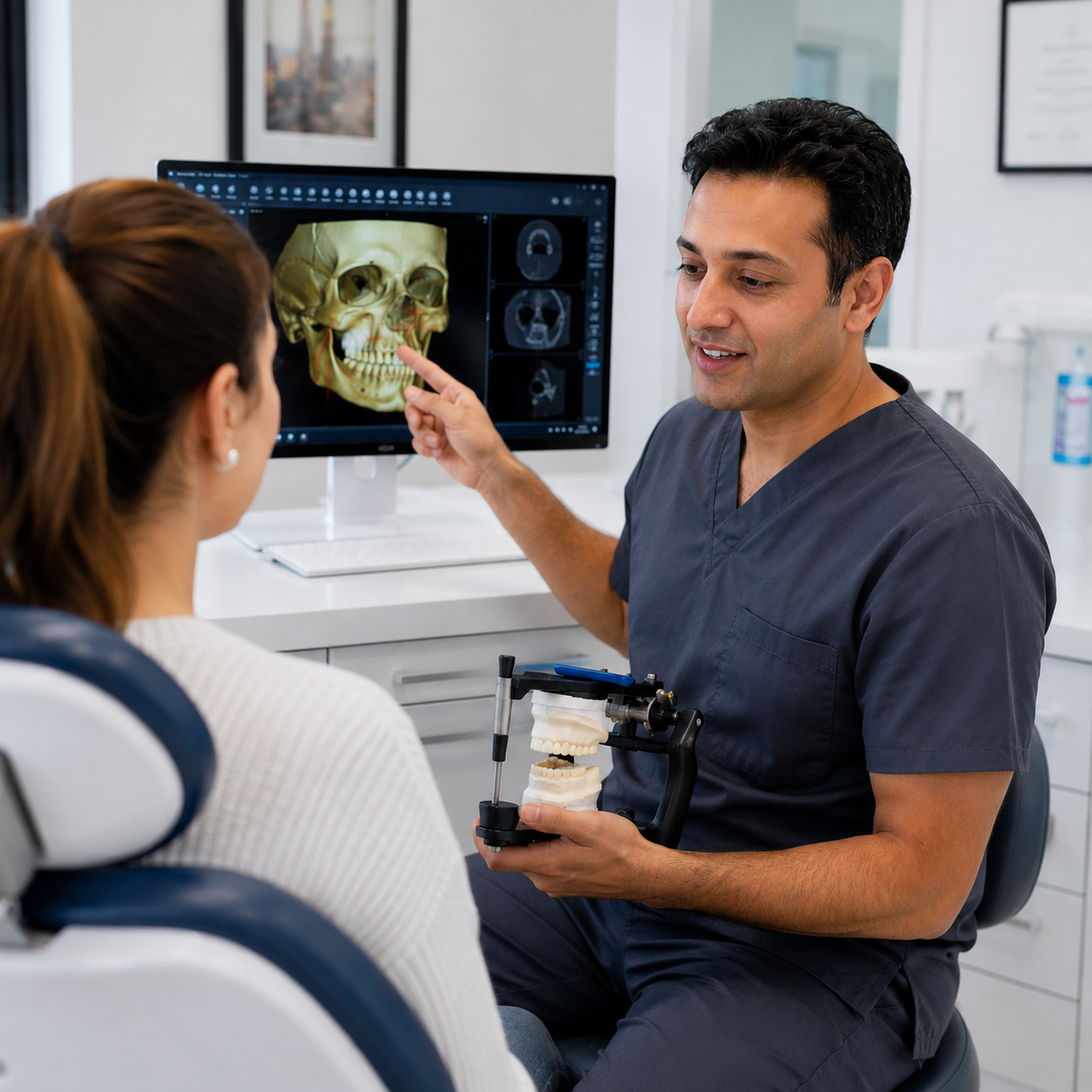
Effective treatment begins with understanding the patient's complete clinical picture. Assessment may include medical history, dental history, muscle examination, jaw joint assessment, bite analysis, and photographs or digital imaging where appropriate. Rather than relying on a single test, information from multiple sources helps create a more complete understanding of jaw function, supporting personalised treatment planning based on each individual's needs.
Bite Optimisation and Functional Rehabilitation
Once contributing factors have been identified, treatment focuses on improving the function of the entire chewing system. Depending on the individual, this may involve adjusting bite relationships, restoring worn teeth, protecting teeth from excessive grinding, improving chewing efficiency, or reducing muscle overload. The objective isn't simply cosmetic improvement. Instead, treatment aims to create a bite that functions comfortably while reducing unnecessary stress on the teeth, muscles and jaw joints, and because every patient is different, recommendations are always individualised.
Long-Term Monitoring and Preventive Care
Bite function can change over time. Factors such as ageing, tooth wear, dental restorations, missing teeth and lifestyle habits may gradually influence how the teeth meet. Regular reviews allow clinicians to monitor these changes before they become more significant, and preventive care may help reduce future complications while supporting long-term oral function and comfort, an approach that aligns closely with modern preventative dentistry.
Long-Term Benefits of Bite Optimisation
When the chewing system functions efficiently, everyday activities such as eating, speaking and smiling often become more comfortable. Patients may notice improvements in jaw comfort, chewing efficiency, muscle tension and overall oral function, though outcomes vary between individuals.
Excessive bite forces may accelerate tooth wear, cracks, fractured fillings and crown failure, and protecting natural tooth structure is one of the central goals of biomimetic dentistry. By preserving healthy enamel wherever possible, restorative treatment aims to improve long-term durability while minimising unnecessary intervention, reflecting a growing movement toward minimally invasive dentistry.
Oral health doesn't exist in isolation. Comfortable jaw function may support improved eating, clearer speech, reduced muscle fatigue, greater confidence and enhanced quality of life. Neuromuscular dentistry recognises that oral health forms part of overall health, and rather than focusing solely on individual teeth, it considers how the entire chewing system contributes to daily wellbeing.
Frequently Asked Questions (FAQs)
1. What is neuromuscular dentistry?
Neuromuscular dentistry is a branch of dentistry that evaluates how the teeth, jaw joints, muscles and nervous system work together. Rather than focusing only on individual teeth, it considers the function of the entire chewing system to identify factors that may contribute to jaw pain, headaches, muscle tension or bite-related problems.
2. Can my bite really cause headaches or neck pain?
The evidence for a direct cause-and-effect relationship between bite and headaches is limited, but temporomandibular disorders and headaches are closely associated. An imbalanced bite may increase strain on the jaw muscles and temporomandibular joints, and addressing bite and jaw function can improve overall posture, which may in turn contribute to reduced tension headaches or facial pain for some people. Headaches and neck pain can have many possible causes, so a comprehensive clinical assessment is important to determine whether bite function is a relevant contributing factor for you.
3. How is neuromuscular dentistry different from traditional dentistry?
Traditional dentistry primarily focuses on diagnosing and treating problems affecting the teeth and gums. Neuromuscular dentistry also evaluates muscle activity, jaw joint function and bite alignment to better understand how these structures interact. This broader perspective may help identify contributing factors in patients with persistent jaw discomfort or complex restorative needs.
4. What is biomimetic dentistry?
Biomimetic dentistry is a conservative approach to restorative care that aims to preserve as much healthy tooth structure as possible. Instead of removing large amounts of natural teeth, treatments use like-for-like materials, such as resin to mimic dentine and ceramic to mimic enamel, designed to restore strength and flexibility while closely mimicking the natural behaviour of healthy teeth, supporting long-term tooth preservation and minimally invasive care.
5. When should I seek professional assessment for jaw pain or bite problems?
You should consider professional assessment if you experience persistent jaw pain, clicking or locking of the jaw, frequent headaches or facial pain, excessive tooth wear, repeated fractures of fillings or crowns, or difficulty chewing comfortably. Early assessment may help identify contributing factors before problems become more significant.
If you're dealing with persistent jaw pain, unexplained headaches, or tooth wear that doesn't seem to have a clear cause, it may be worth looking at how your bite, muscles and jaw joints are working together rather than treating each symptom on its own. Dr Maheer Shah takes a neuromuscular and biomimetic approach to dentistry, focused on restoring healthy function while preserving as much natural tooth structure as possible. More detail on his approach is available on his Health Hunter profile.